Lasius Emarginatus
"The House Ant"
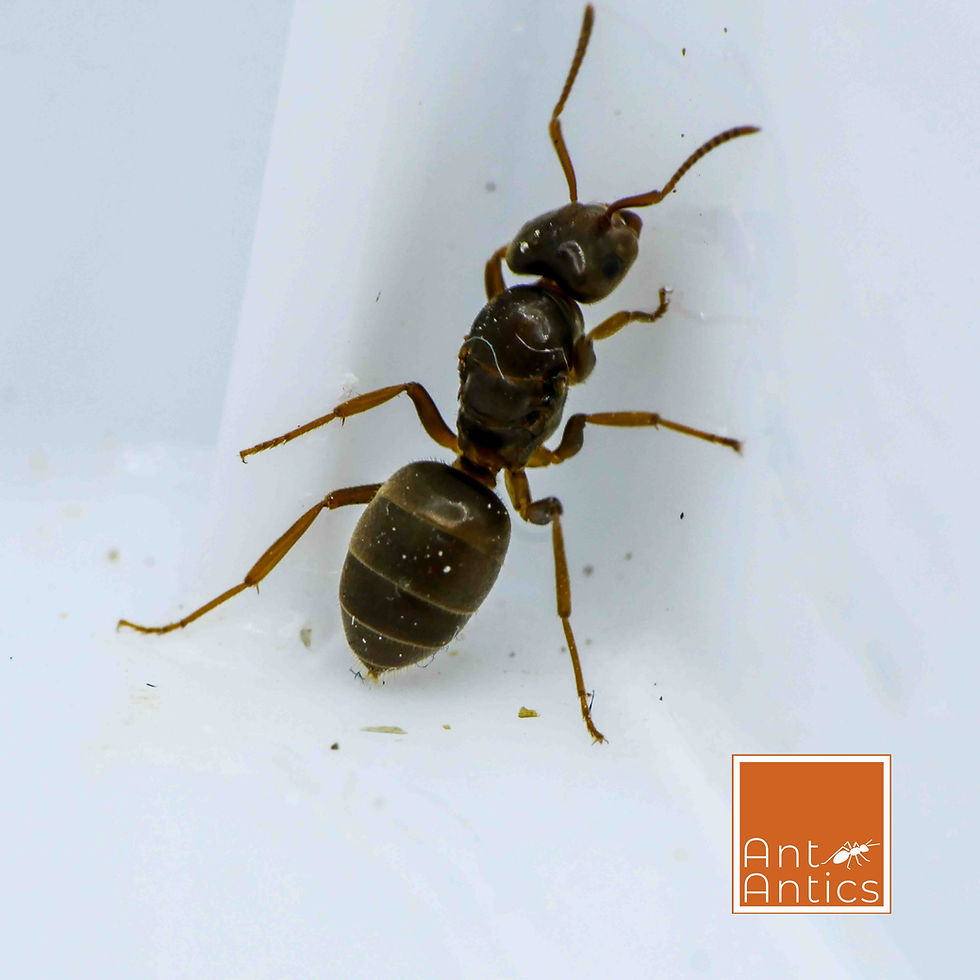
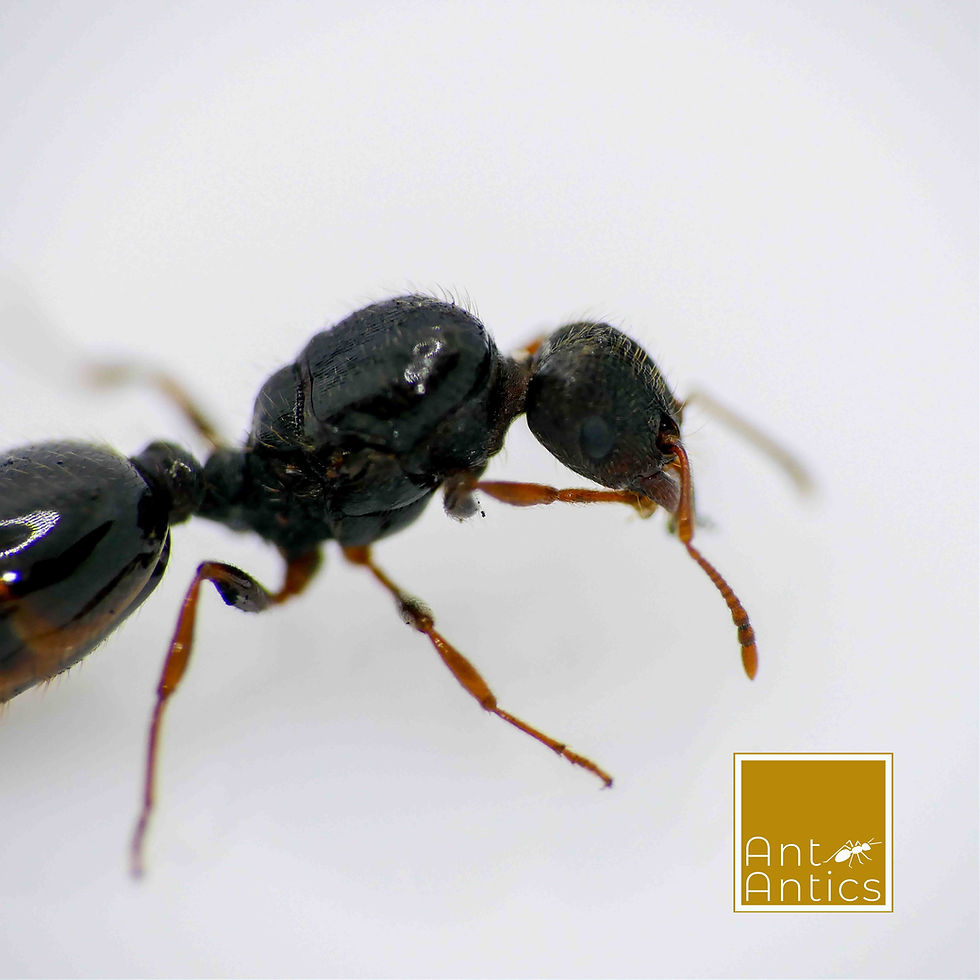
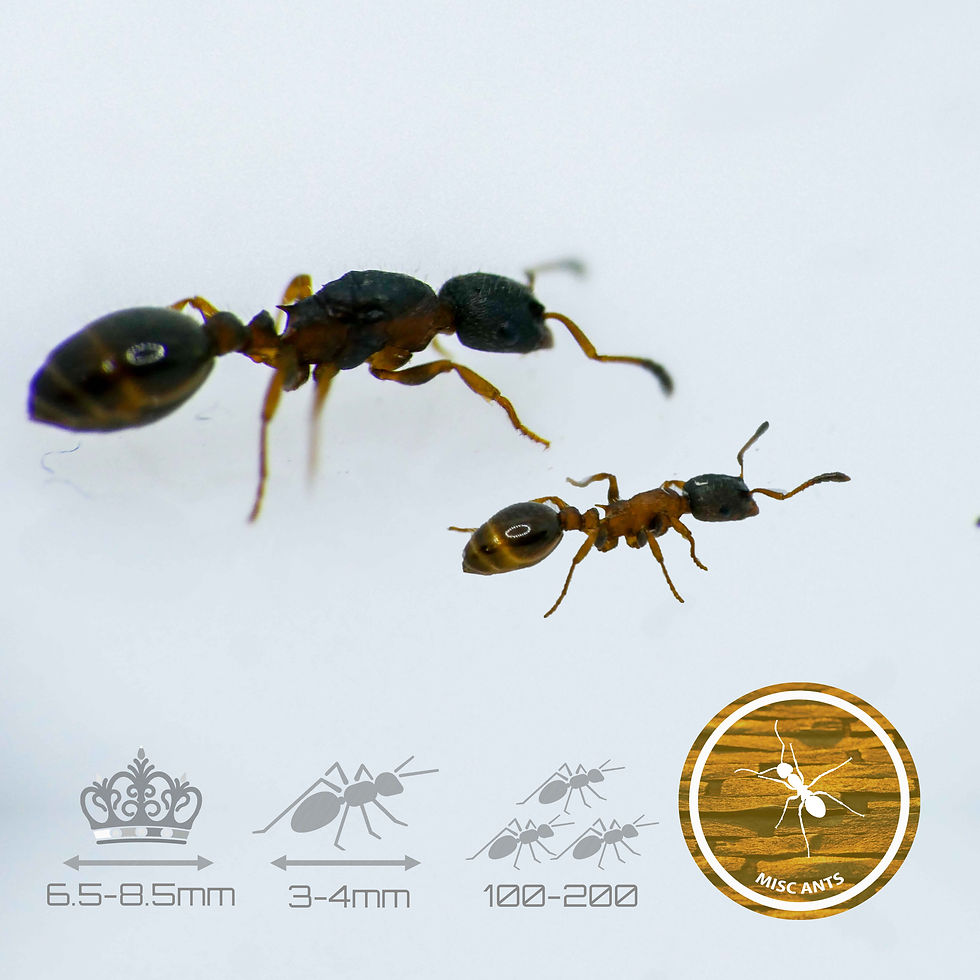
Although they share the Lasius name, Emarginatus are by far one of the prettier species. With workers displaying a striking bi colour or a light brown thorax on a black head and gaster they are a wonderful species to watch.
Despite their care being similar (as with most native species) Unlike other Lasius however this species is often found in homes because of their ability to chew and tunnel through thermal insulation and even wood by squeezing and opening joints in its construction.
In the wild, other than homes this monogyne species will happily nest amongst gravel and open spaces. Anywhere there is urban development is appealing to them.
Emarginatus are an aggressive species and will have no trouble attacking living insects. They are very fast at recruiting and can dominate food sources quickly. The fast recruitment also benefits them in the great at nest defence. Likely a reason why Lasius Umbratus steer clear of this species when looking for a host colony to take over.
They have a thirst for sugars too, be sure to keep them topped up. As masters of swarming, if they are attempting to escape their setup then they will likely need more food.
Colony Size
Up to 1,000 workers
Queen Age
Up to 16 years
Temperature
Room Temperature 18 to 23 degrees
Hibernation
Yes - November to March
Polymorphic (Different size casts)
No
Sting
No
Bite
Yes (but you will not feel it)
Diet
Insects, Sugars, Carbs
Nest Type
Acrylic, Sand, Earth, Ytong, Plaster, Glass
Size
Queen - 7mm-9mm
Worker - 3mm-4mm
Development
Egg to Adult Worker - 6 to 8 weeks